OEE
OEE Watch
@oee
live
Availability, performance and stops across every cell
Finding capacity, and more importantly capitalising on it, takes seeing where it hides, putting that in the hands of the people who can act, and automating the watch around the clock. See more. Know more. Do more.
Connects mixed-age PLCs, control panels, sensors, and computer vision for manual work to give you a live, unvarnished view of shop floor activity.
How Insights works →Puts 30 years of maintenance logs, past troubleshooting steps, and SOPs behind a simple question for shift teams on the floor.
How Assistant works →Monitors line trends around the clock, automatically detecting micro-stops, flagging process drift, and prompting action before shift targets drop.
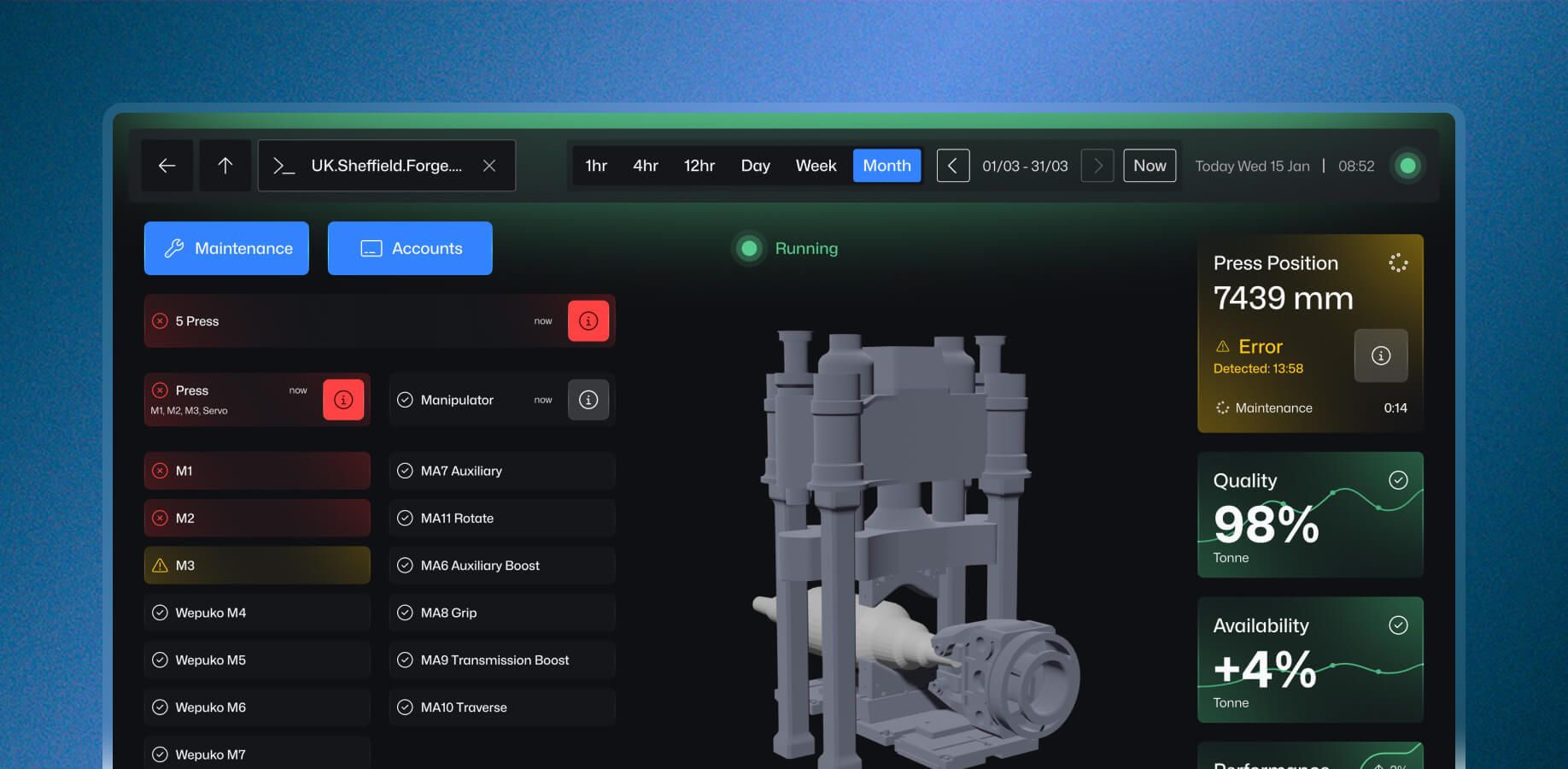
How Agent works →You can't improve what you can't see. Most of a shop floor goes unmeasured: stops hidden as workarounds, manual steps no sensor reaches, older machines that say nothing at all. Insights connects to all of it and turns that activity into hard data.
Improvement needs measurement end to end, so we measure everything. Modern PLCs over Ethernet. Older machines by reading the signals going to their control panels. Anything else through third-party sensors.
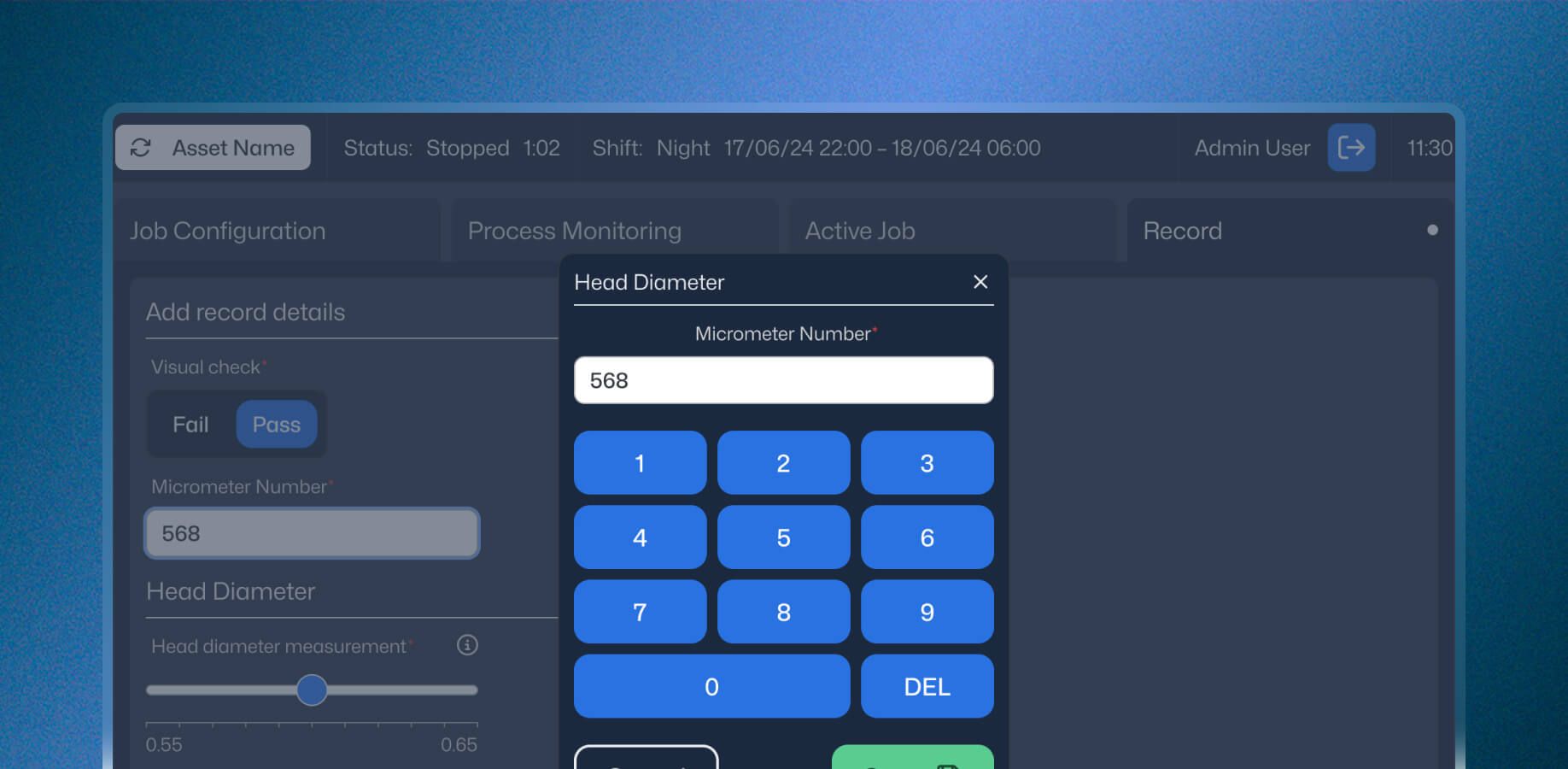
And where no sensor can reach, a camera can, measuring the manual work that decides so much of a factory's output, without stopping the process or asking anyone to key in a thing.
flagged: variability and idle time invisible to the eye
Every machine and process reports into one consistent data structure, so the whole operation speaks the same language. The C-suite, the plant manager and the operator on the line all read from the same live data, each at the level that's useful to them.
We shape that structure around how your factory actually runs. A CNC cell, a manual assembly bench and a packing line each get a view that fits, with the same foundation underneath so nothing has to be reconciled by hand and everything compares like for like.
one namespace · site → line → cell → operation
“Unlocking data has the power to revolutionise the manufacturing industry. With Razor's expertise and the dashboards they developed, we are able to visualise operations from a number of sites across the UK all in one place.”Dr. Jon Stammers · Theme Lead, Data, Connectivity & AI · AMRC
Insight isn't locked in a monthly report or a manager's dashboard. Everyone who can act on the data can see it: operators get the same access to what's happening as management does, in a form that makes sense for the job in front of them.
When the person at the machine sees the same truth as the person planning the schedule, decisions get faster and better, making improvement something the whole floor does, not something done to it.
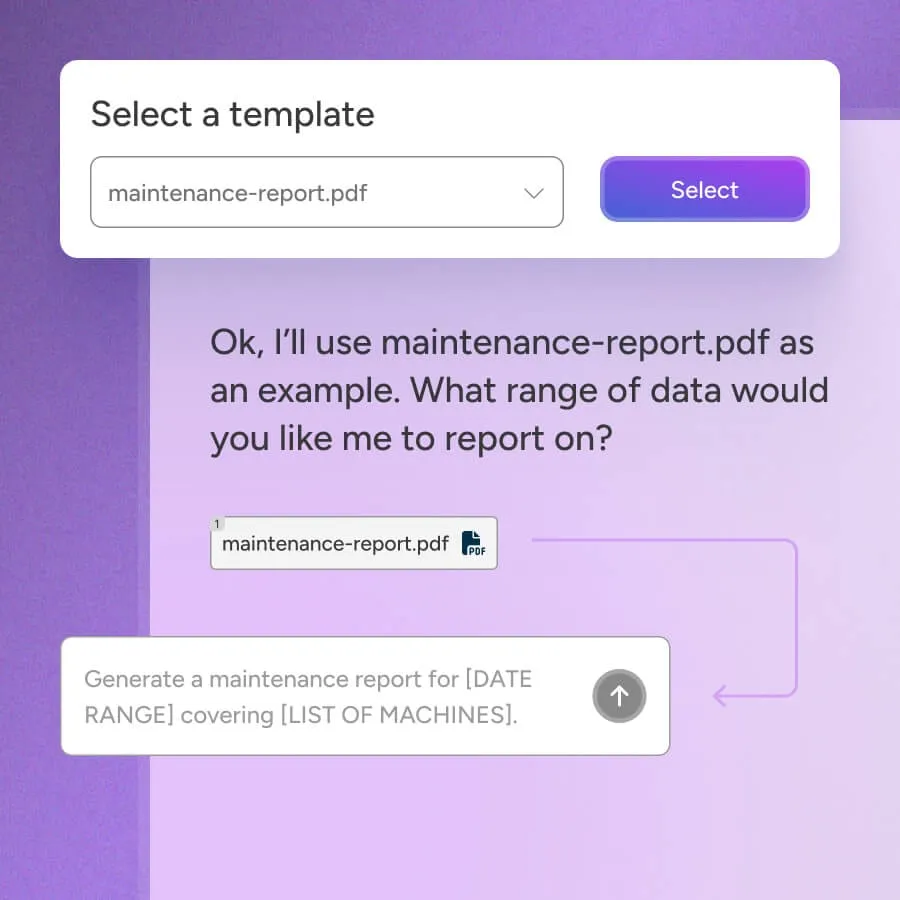
The answer you need usually already exists somewhere in the business, trapped in one person's head, in a folder nobody can find, in a system nobody has time to search. Assistant puts it behind a single question, answered in plain language and grounded in your own data.
Anyone asks a question in their own words and gets an answer that reaches across Insights readings, maintenance records, drawings, SOPs, ERP and finance systems and shift notes simultaneously.
Every answer comes back with its sources, so you can see exactly where it came from and check it. A straight answer with the receipts, not a confident guess. Nothing invented.
Experienced staff are retiring faster than their know-how can be replaced. At one manufacturer that left a stretched maintenance team buried in call-outs operators could have handled: a machine that just needed resetting, a guard door that wasn't latched.
Grounded in seven years of their own maintenance records, Assistant now answers on the back-shift instead. Six times out of seven it's the door interlock; they check it, reset, and are running again in minutes.
Because Assistant reaches across systems, it doesn't stop at the shop floor. Sales can check real production status before promising a date. Procurement can see what's actually happening before they order. Planning can see where a job really is. The factory stops being a black box to the departments that depend on it.
Once you can see everything, you can see too much. A busy floor throws off more alarms, trends and signals than any one person could follow, so the ones that matter drown in the ones that don't. An agent is a tireless digital worker with a single job: watch one part of the operation, make sense of what happens there, and act.
One watches OEE, one watches quality, one watches maintenance, one runs the shift handover, each minding its own corner around the clock and never getting tired, distracted, or pulled onto something else.
Nothing worth seeing goes unseen, on the night shift or the third weekend running. The coverage a person could never sustain becomes the baseline.
Availability, performance and stops across every cell
Reject rates and drift across every line.
Wear signatures and early failure signs across every asset.
Open issues and context across every shift change.
Old automation followed a fixed chain of if-this-then-that and buried you in alerts that couldn't tell important from trivial. Agent interprets what it's seeing, weighs the cost, and decides what's genuinely worth raising.
It's the difference between a smoke detector and a colleague who knows the floor: what reaches you is already triaged, with the thinking attached.
Vibration on the B04 spindle has crept up alongside a 3°C rise in bearing temperature over two weeks. On its own, neither would trip an alarm. Together they match the signature that preceded the B07 bearing failure. Recommend inspection at the next planned stop.
Agents handle the routine on their own, but the decisions that carry weight stop and wait for a person. Rescheduling a plan, approving a purchase, signing off a change: the agent brings the recommendation and the reasoning, and you make the call.
Every decision is logged, so there's a full audit trail of what was recommended, who approved it and when. Automation that speeds the work without taking the judgement out of it.
Recommend bringing the A12 vacuum-cup replacement forward to tonight's planned stop, to avoid another shift of low-pressure losses. Needs your sign-off to adjust the shift plan.
You don't scroll people; you follow the agents watching your floor. Each posts what it finds, the most costly pinned to the top, every item already carrying its reasoning and the action it recommends. Try the buttons: they behave the way they would on your floor.
Measuring the manual work on your hardware, on your terms.
The caseYour MES runs the factory. DataQI helps you learn from it.
StartSee all three layers against one process on your floor.
We're not here to replace your execution system. An MES runs production in real time. DataQI is built to learn from it and support improvement. The two sit side by side.
| Comparison | Typical MES | DataQI |
|---|---|---|
| Focus | Executes and records production transactions in real time. | Historical and real-time production data to drive improvement. |
| OEE & KPIs | Calculates OEE at line or cell level, often with local definitions. | Standardises, contextualises and compares across lines, shifts, products and sites. |
| Historical analysis | Limited long-term history; optimised for execution performance. | Deep historical storage and trend analysis. |
| Production flow | Manages and enforces work order flow. | Visualises how work orders move and perform across the shop floor. |
| Insight | Shows what happened. | Explains why it happened. |
No MES at all? DataQI can stand on its own. Reusable connectors and components cover common needs; the sensing, data model and workflow are then configured around the defined process rather than forcing your factory into a standard template.
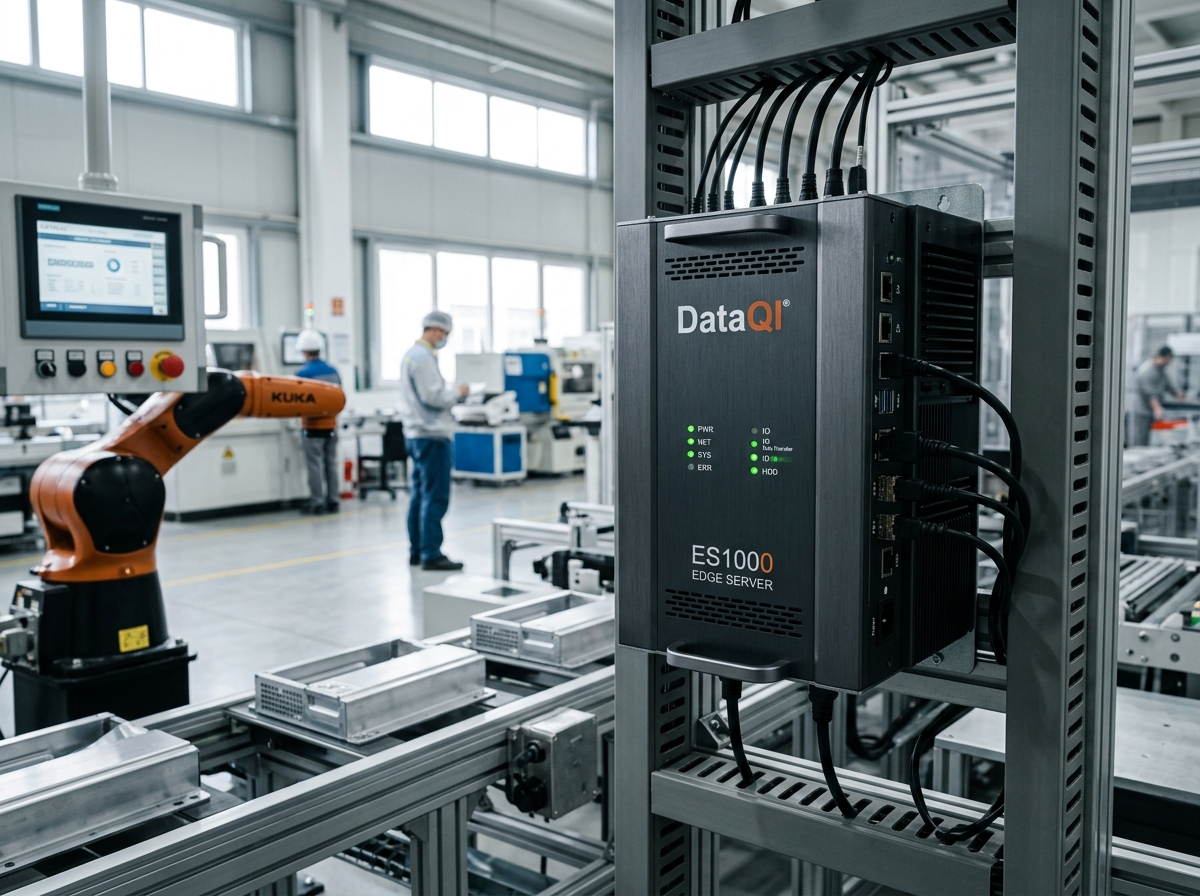
DataQI can run entirely on-premise. For complete site autonomy, we offer the self-contained DataQI Appliance Box: a dedicated, pre-configured hardware unit installed directly on your shop floor.
Whether deployed on your existing server infrastructure, private UK cloud, or our dedicated on-site appliance box, your data stays under your control with zero external dependencies and read-only PLC connections.