B04 · CNC
RUNNING
Work done by hand shapes your output as much as any machine, yet it's the one part missing from your numbers. DataQI makes it count.
Real-time monitoring in operation: DataQI tracking state, stops and performance on a large-format machine without wiring a single new sensor.
OEE is how you find the capacity you already have. But a big share of what leaves your floor still runs on hands, and that share has never given you a number. Two things keep it that way.
01 · No signal to read
A press or a CNC cell streams its own state, second by second, with nobody lifting a finger. The same work done by hand produces no such signal: the parts get made, but nothing records how. So the automated cells report themselves while the manual ones sit blank, quietly setting the pace around them.
02 · The false choice
The usual fix is a clipboard, or a tablet and a form. But asking an operator to log their own work steals the very seconds you're trying to save, and the figures come back late and half remembered. So it never sticks.
Point computer vision at a manual process and it reads the work a stopwatch never could: every unit, every shift, without slowing anyone down. The part of the floor that was dark now produces the same hard data as your machines.
01 · See every step
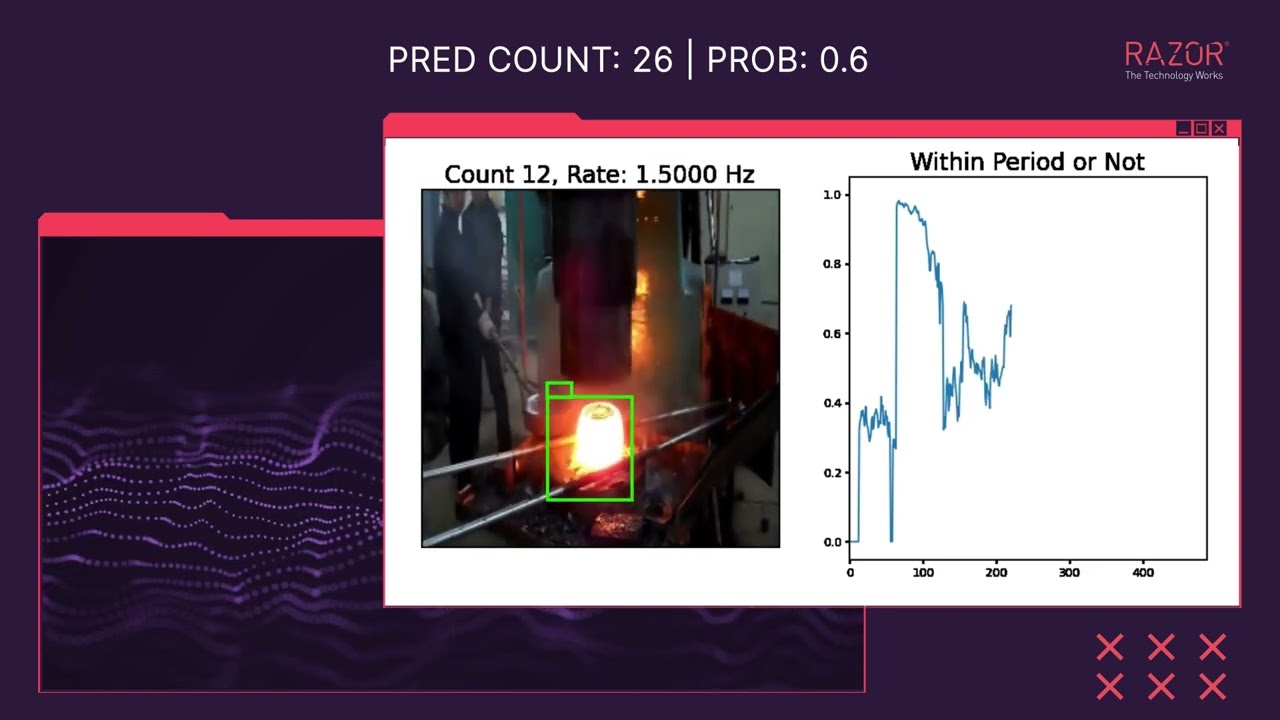
Vision times each step as it happens and counts what comes off the end. Not last year's time study, but the live spread: the steps that run clean, and the one that every few units blows out.
Usually a single fiddly step. Invisible on a walkaround, real money across a full order, leading to a costed case to redesign the part or feed it differently.
flagged: step 3 variability 76% · invisible to the eye on the floor
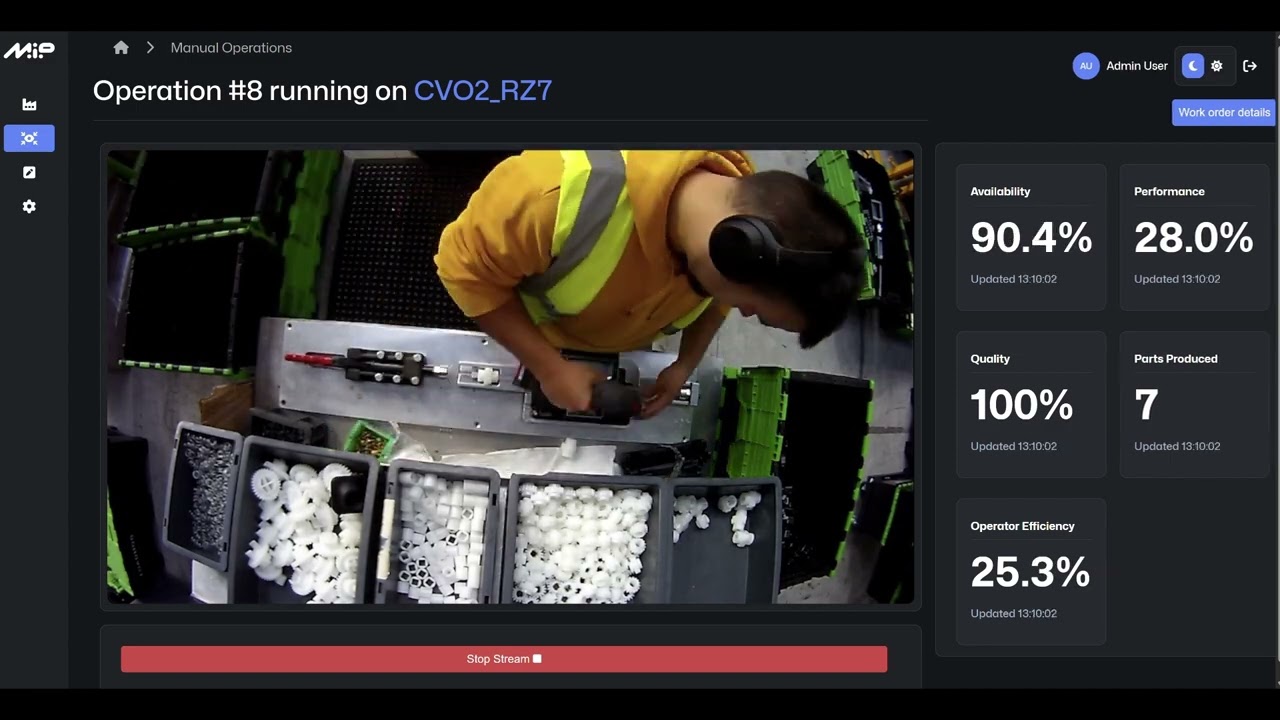
DataQI tracking step-by-step timing on a manual work cell in real time, without clipboards, forms or interrupting the operator.
02 · Roll it into OEE
Those timings become the three numbers you already track: availability, performance and quality. The manual bench sits in the same view as the CNC cell, comparable like for like.
Where the manual cells lose time stops being a guess. A hand process can carry an improvement project backed by real data, the same as any machine.
first number this cell has had
largest loss: step 3 variability · worth chasing first
Vision on a shop floor raises fair questions before it earns trust. Here's how we answer the ones that decide whether it belongs on your line.
Computer vision here is a measuring instrument, not a watchful eye. It reads timings and counts in order to improve the work, never to rank or replace the people doing it. The output is a better process, not a scorecard on an operator.
Video is processed on your own hardware, in the region you choose. The frames never leave the site.
Specialised models learn your process and run on your infrastructure. You don't need a frontier cloud to time an assembly step.
The data lands in the same Insights foundation as your PLCs and sensors, alongside your MES, not replacing it.
Vision surfaces the evidence and the costed case. What to change, and how, stays with the people who run the line.
processed on your hardware · public cloud not required
A model on your own hardware turns what the camera sees into timings and counts. Only that data moves; the video stays put.